

Introduction
A tick bite does not in itself mean an infection, but ticks can carry a number of pathogens, including the Borrelia bacteria that cause Lyme disease and the tick-borne encephalitis virus. For this reason, it is extremely important to remove a tick that has burrowed into the skin as soon as possible and in a proper manner.
Even today, many people still use methods such as applying oil, cream, or alcohol, which can actually increase the risk of infection. In this guide, we’ll show you how to properly remove a tick, what mistakes to avoid, and when you should see a doctor.
Why is it important to remove a tick as soon as possible?
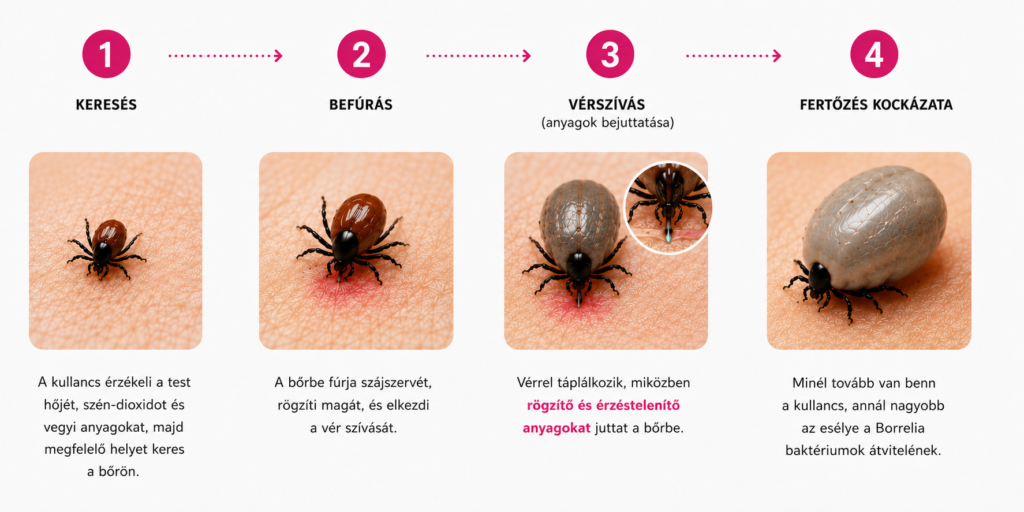
While feeding, a tick can transmit various pathogens into the body. Although the time it takes for an infection to be transmitted depends on the type of pathogen, it is generally true that removing the tick can reduce the risk of infection.
That is why it is important to remove any tick as soon as possible after noticing it.
What will you need to remove a tick?
The best tools:
- tick-removal tweezers
- special tick remover
- tweezers with thin tips
Steps for Properly Removing a Tick
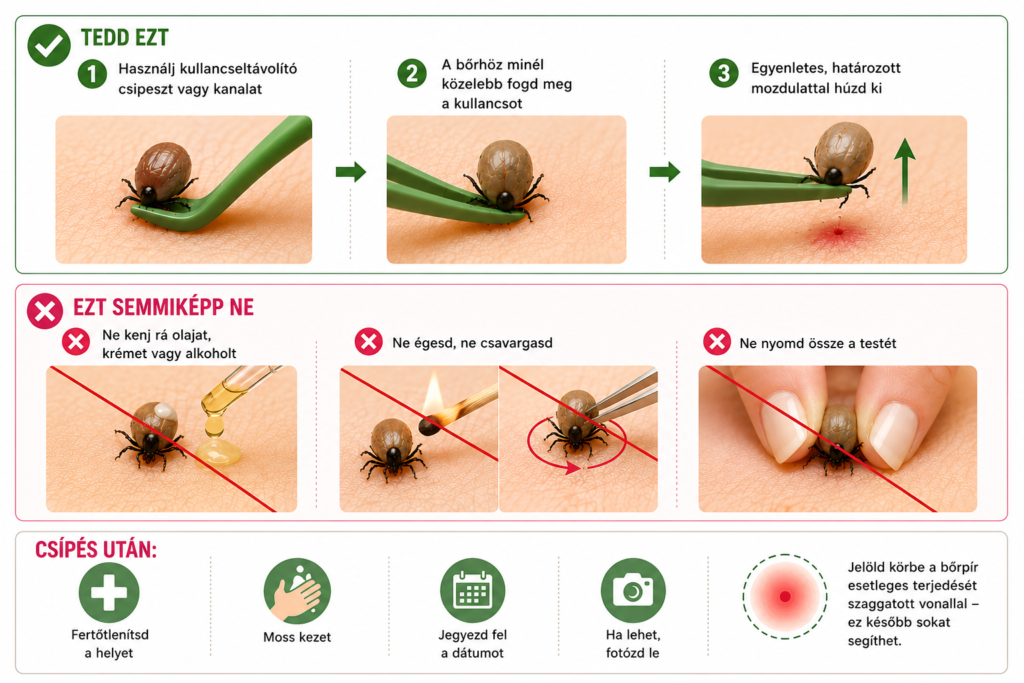
1. Let's wash our hands
Wash your hands thoroughly both before and after removing a tick.
2. Grasp the tick close to the skin
Always try to grasp the tick near its head or mouthparts.
It's important not to squeeze the abdomen.
3. Pull it out in one smooth motion
Pull it out slowly and firmly.
There is no need to turn or twist it.
The goal is to remove the tick whole.
Be careful to grip the tick firmly enough so that your grip doesn’t slip down to its body (abdomen), which could cause infected bodily fluids to be squeezed into the wound!
There are also tick-removal tweezers that use a spring to keep the prongs pressed together with the right amount of force.
4. Disinfect the bite site
After removal, disinfect the skin, then monitor the area over the next few weeks.
If redness or a rash appears, draw a dotted line around it and take a photo every day.
What should we NOT do when removing a tick?
Many common methods can actually be harmful.
Don't coat it with oil
It is a long-standing misconception that oil suffocates ticks.
In fact, it can cause stress or suffocation in the host, which may increase the backflow of pathogens.
Do not use cream or grease
Various lubricants do not help with removal. Creams block the tick’s access to air, so as it suffocates, infected blood may flow back into the wound.
Do not apply alcohol to the tick
Alcohol does not help ensure safe removal either. As the tick dies or suffocates, infected blood may even flow back into the wound.
Do not burn or heat it
Using a match, lighter, or other heat source is dangerous and ineffective. The tick will die, but in the process, infected blood may flow back into the wound.
Do not squeeze the tick's body
Squeezing a tick can increase the risk of infection.
If you do not have special tick-removal tweezers or a spoon, you can use a clean pair of fine-tipped eyebrow tweezers. Some people, lacking these tools, tie a knot of thread around the tick’s head and try to pull it out of the skin that way. When using non-specialized tools, there is always a risk of forcing infected bodily fluids from the tick into the wound, thereby increasing the risk of infection.
What happens if the tick's head stays embedded?
In most cases, it is not the tick's head but part of its mouthparts that remains embedded in the skin.
This is usually:
- minor inflammation
- redness
- sensitivity
may cause.
In most cases, the body naturally expels the remaining portion.
If the area becomes severely inflamed or starts to ooze, you should see a doctor.
When should you see a doctor?
Consult a professional if:
- I can't remove the tick
- The site of the sting is severely inflamed
- a fever sets in
- a rosette-like redness develops
- flu-like symptoms appear
- nervous system or joint problems occur
What should we watch out for after removing a tick?
After removing the tick, keep an eye on the following in the coming weeks:
- the site of the sting
- the development of redness
- any fever
- joint pain
- fatigue
- nervous system symptoms
Not all infections cause immediate symptoms, which is why monitoring is especially important.
Is it worth sending the tick to a lab?
Many people would like to have the tick they removed tested.
Although this may provide useful information in certain cases, it does not, on its own, replace an examination of the human body. An infected tick does not automatically mean that an infection has occurred, and the reverse is also true: symptoms can develop even if the tick test is negative. The main benefit of the test is that, in the event of symptoms, it can provide the doctor with additional information about the pathogen present in the tick and the type of infection that can be expected.
Frequently asked questions
How long do you have to remove a tick?
As soon as possible. The shorter the time it remains in the skin, the lower the risk of infection.
Does it hurt to remove a tick?
Generally, no. Tick saliva contains substances that have an anesthetic effect.
Should I screw it in or pull it out?
According to most professional recommendations, a steady pulling motion is sufficient. A slight twisting motion is usually used to prevent the tweezers from slipping on the tick’s body. However, when twisting, the force of our grip can vary, causing the tweezers to slip. Spring-loaded tweezers make it easier to apply a slight twisting motion.
What if the tick breaks off?
The retained oral organ usually expels itself, but a medical examination is recommended in case of inflammation.
Is it necessary to take antibiotics after removing a tick?
Only if symptoms characteristic of Lyme disease are present. A doctor will determine whether treatment is necessary based on the symptoms and risk factors. Antibiotic treatment used for prevention—such as a single dose of doxycycline—has a detrimental effect on the course of the disease.
Summary
Removing a tick properly is a simple but important task. The most important rule is to remove the tick as soon as possible using the proper tool, grasping it close to the skin. Avoid treating the bite with oil, alcohol, or other home remedies, and monitor the bite site in the weeks that follow.
If you experience any unusual symptoms after a tick bite, you should consult a healthcare professional as soon as possible to ensure early detection of any infections.


 Hungarian
 English
 Polish
 Spanish